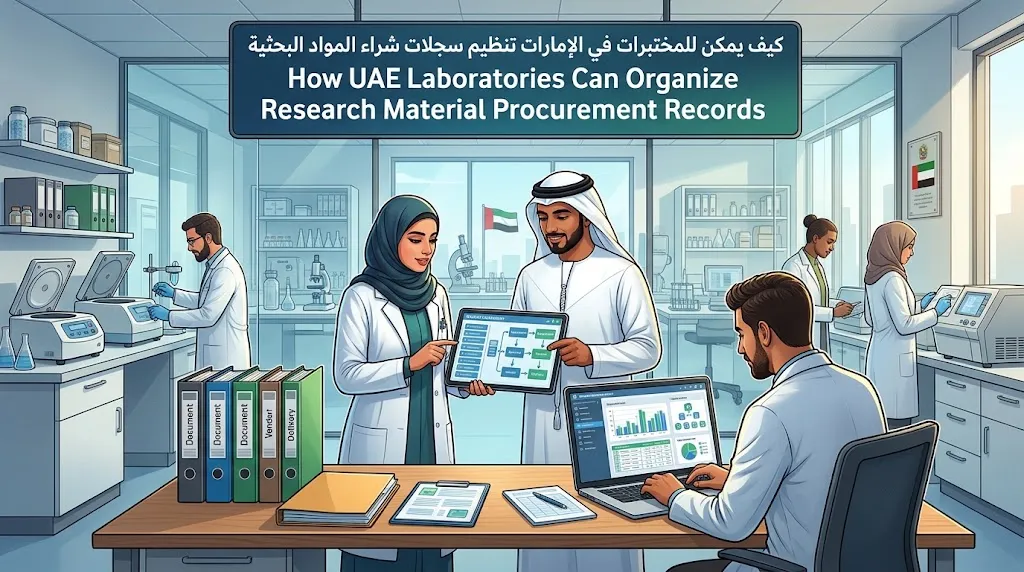
Organized procurement records help laboratories maintain a clear history of the research materials they purchase, receive, and manage. From the initial supplier inquiry to final delivery, every stage can generate important documents that support transparency, accountability, and internal recordkeeping.
For laboratories working with research-material suppliers such as Remy Research, maintaining consistent procurement documentation can make it easier to retrieve product information, review supporting reports, and investigate discrepancies.
1. Why Procurement Records Matter
Procurement records provide evidence of how a laboratory acquired a particular research material. They connect purchasing decisions with supplier information, product descriptions, commercial documents, and receiving records.
A well-maintained procurement record can help laboratories:
- Identify the original supplier.
- Confirm which product was ordered.
- Review the quantity purchased.
- Retrieve available technical documentation.
- Match deliveries with purchase orders.
- Track relevant batch references.
- Investigate discrepancies.
- Support internal reviews and audits.
Without organized records, important information may become scattered across emails, invoices, spreadsheets, and individual staff files.
2. Establish a Standard Procurement Record Structure
A consistent structure makes procurement information easier to locate and review.

Laboratories may divide procurement records into the following categories:
Supplier records: Business information, contact details, and supplier correspondence.
Product records: Product descriptions, specifications, and catalogue references.
Purchase records: Quotations, purchase orders, invoices, and payment confirmations.
Technical records: Available certificates, analytical reports, and product documentation.
Delivery records: Shipment references, dispatch information, and receiving confirmations.
Review records: Discrepancy reports, approvals, and relevant internal communications.
The exact structure should reflect the laboratory’s size, purchasing activities, and internal procedures.
3. Maintain Consistent Supplier Information
Supplier information should be recorded in a central location rather than stored only in individual email accounts.
A supplier record may contain:
- Supplier or business name.
- Official website.
- Business contact details.
- Relevant correspondence.
- Product categories supplied.
- Available documentation.
- Date of supplier review.
- Internal supplier reference.
Supplier information should be reviewed periodically to ensure that outdated contact details and business references do not remain in active procurement records.
4. Record Product Information Separately
A supplier may offer multiple products, formats, or variations. Therefore, product information should be maintained separately from general supplier information.
Useful product record fields include:
- Product name.
- Product reference.
- Description.
- Format or packaging information.
- Relevant technical specifications.
- Stated intended use.
- Available storage information.
- Related documentation references.
This separation helps laboratories identify exactly which material was included in a particular purchase.
5. Assign Internal Procurement References
An internal procurement reference can help connect documents generated at different stages of the purchasing process.
For example, a laboratory might use:
- PR-2026-001 for a purchase request.
- PO-2026-001 for a purchase order.
- RCV-2026-001 for a receiving record.
These are illustrative reference formats, not official industry standards.
A consistent numbering system helps staff connect purchase requests, orders, invoices, deliveries, and technical documents without relying entirely on product names.
6. Keep Batch and Analytical Documentation Connected
Research-material procurement records may include analytical documents associated with specific samples or batches.
When reviewing Batch Documentation, laboratories should ensure that available report references are recorded accurately and connected to the relevant procurement item.
A technical document record may include:
- Document title.
- Report reference.
- Testing laboratory information, where stated.
- Sample or batch reference.
- Issue date.
- Analytical method.
- Relevant limitations.
- Associated product or procurement reference.
A report should only be associated with the sample or batch it actually identifies. Similar product names do not establish that two materials share the same analytical documentation.
7. Organize Digital Procurement Files
Digital storage can make procurement records easier to retrieve, share with authorized staff, and review.
A laboratory may create a folder structure such as:
Procurement Records
- Suppliers
- Product Information
- Purchase Requests
- Purchase Orders
- Invoices
- Technical Documentation
- Delivery Records
- Receiving Inspections
- Discrepancy Reports
Files should use consistent names that identify the relevant supplier, product, document type, and date where appropriate.
For example:
2026-11-05_ProductName_PurchaseOrder.pdf
This is an illustrative naming convention that can be adapted to the laboratory’s requirements.
8. Use a Central Procurement Register
A central procurement register provides an overview of purchasing activity.
It may be maintained in a spreadsheet, database, or laboratory management system.
Useful fields include:
| Field | Purpose |
| Procurement Reference | Identifies the purchasing record |
| Supplier | Records the source of the material |
| Product Name | Identifies the requested material |
| Order Date | Records when the order was placed |
| Purchase Order | Links the order document |
| Quantity | Records the ordered quantity |
| Batch Reference | Records the supplier’s batch or lot reference, where available |
| Delivery Date | Records receipt |
| Documentation Status | Tracks available supporting documents |
| Review Status | Shows whether the record has been reviewed |
The register should link to supporting documents rather than attempting to replace them.
9. Document Receiving and Verification
When materials arrive, receiving staff should compare the shipment with the relevant procurement records.
The receiving record may include:
- Delivery date.
- Purchase order reference.
- Supplier name.
- Product description.
- Quantity received.
- Packaging observations.
- Product label information.
- Batch or lot reference.
- Available accompanying documents.
- Any identified discrepancies.
If the delivered material does not match the purchase documentation, the issue should be recorded and referred for review.
Receiving confirmation should not be treated as automatic confirmation of analytical quality or material suitability.
10. Establish Document Review and Approval Procedures
Laboratories may establish internal procedures to identify who reviews and approves procurement documentation.
Depending on the laboratory’s structure, responsibilities may be divided between:
Purchasing staff: Maintain supplier and commercial records.
Receiving staff: Record delivery details and packaging observations.
Technical personnel: Review product specifications and analytical documents.
Supervisors: Review unresolved discrepancies and required approvals.
Clear responsibility assignments help prevent important documents from being overlooked.
11. Manage Document Revisions and Corrections
Procurement information may change after an order is placed. For example, a supplier may provide an updated document, corrected invoice, or revised delivery reference.
Laboratories should retain a clear history of relevant changes.
A revision record may identify:
- Original document reference.
- Updated document reference.
- Date received.
- Reason for the revision.
- Person reviewing the change.
- Related procurement record.
Original records should not be silently overwritten when maintaining a controlled documentation history.
12. Protect Procurement Records
Procurement records may contain commercial, operational, and technical information. Access should therefore be managed according to the laboratory’s internal data-protection procedures.
Useful controls may include:
- Access permissions.
- Regular backups.
- Version history.
- Secure document storage.
- Authorized editing rights.
- Defined retention periods.
Digital records should remain accessible to authorized personnel while being protected against accidental deletion or unauthorized modification.
13. Common Procurement Recordkeeping Problems
Laboratories may encounter several documentation challenges:
- Supplier details stored in different locations.
- Missing purchase order references.
- Product names recorded inconsistently.
- Batch information omitted from receiving records.
- Analytical reports disconnected from procurement files.
- Multiple versions of the same document.
- Missing delivery confirmations.
- Unclear approval responsibilities.
- Incomplete discrepancy records.
A standardized procurement process can reduce these problems and improve document retrieval.
14. Procurement Record Organization Checklist
Laboratories can use this checklist to review their procurement documentation system:
- Is supplier information maintained centrally?
- Are product records separate from supplier records?
- Does each purchase have an internal reference?
- Are purchase orders and invoices retained?
- Are available analytical reports linked to relevant products?
- Are batch references recorded where provided?
- Are receiving inspections documented?
- Are discrepancies recorded and reviewed?
- Are document revisions traceable?
- Are access permissions appropriately managed?
- Are backups and retention procedures established?
The checklist should be adapted to the laboratory’s activities and applicable requirements.
Conclusion
Organizing research-material procurement records helps laboratories maintain a clear connection between suppliers, products, purchasing decisions, analytical documentation, and deliveries.
A consistent record structure, internal references, central registers, and controlled document revisions can make procurement information easier to retrieve and review. These practices support better administrative traceability without replacing independent scientific assessment.
All materials discussed in this article are strictly for research-use-only and in-vitro laboratory research. They are not intended for human or veterinary use, diagnosis, treatment, or administration.