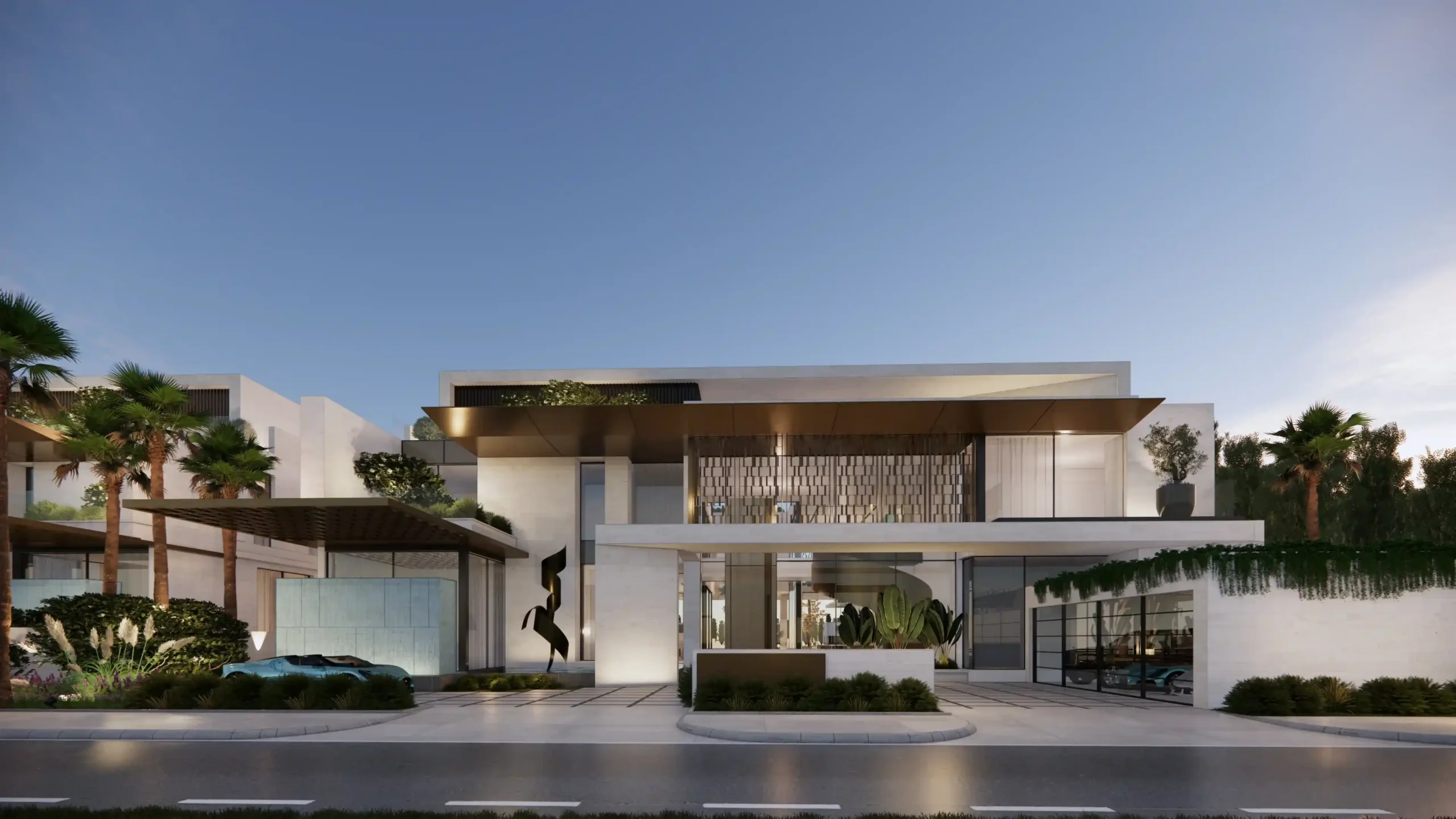
The UAE has produced some of the most ambitious architecture in the world. It has also produced buildings that looked impressive in a brochure but failed to age well, perform efficiently, or serve their occupants with any real quality. The difference between these two outcomes is not simply a matter of budget. It is a matter of the quality of architectural thinking that is applied from the very first day of a project.
This guide examines the specific principles and qualities that define genuinely great architecture design in the UAE context, drawing on the characteristics of buildings and projects that have stood the test of time in this demanding, fast-moving market.
| Key Stat: According to the Dubai Statistics Centre, over 12,000 new residential units were delivered in Dubai in 2024 alone. In a market this active, design quality is the single greatest differentiator between properties that hold their value and those that do not. |
1. A Concept That Is Clear and Authentic
Every great architecture project begins with a concept that is both clear and authentic. In the UAE, where architectural ambition is high and client expectations are substantial, there is a risk of design becoming a collection of impressive individual elements without a unifying idea. The best architecture design projects are driven by a single, compelling concept that informs every decision, from the orientation of the building on its site to the profile of a window reveal.
This concept should respond to three things: the specific site and its context, the culture and values of the client, and the functional requirements of the building’s users. When these three forces are synthesised into a coherent idea, the result is architecture that feels inevitable rather than arbitrary, purposeful rather than decorative.
2. Rigorous Site Analysis
In the UAE, site conditions are rarely straightforward. Extreme heat, high humidity in coastal areas, sandy or rocky substrates, salt exposure near the coast, and complex wind patterns all demand careful analysis before any design work begins. Great architecture design in the UAE demonstrates that the building belongs to its specific site and that its form and orientation are the product of genuine environmental analysis, not simply the repetition of a preferred aesthetic.
- Solar path analysis determines optimal building orientation and the positioning of openings to minimise solar heat gain while maximising access to natural light from the north.
- Prevailing wind studies inform the design of outdoor spaces, natural ventilation strategies, and the positioning of operable openings.
- Geotechnical investigation informs foundation strategy, particularly important in Dubai where ground conditions vary considerably between sandy desert, reclaimed land, and rocky substrates.
- Views and privacy analysis shapes the arrangement of facades, particularly in dense communities such as Dubai Marina, Downtown Dubai, or Jumeirah Beach Residence.
3. Material Integrity and Quality
The choice and application of materials is one of the most powerful tools available in architecture design. In the UAE, where the climate is extreme, maintenance access can be complex, and client expectations of quality are high, material selection requires both aesthetic judgement and technical rigour. Great UAE architecture uses materials honestly. Travertine expresses its natural veining. Timber shows its grain. Concrete reveals its texture. There is no pretence.
Durability in the UAE context is non-negotiable. Salt-laden air in coastal locations attacks metal fixings, glazing seals, and untreated stone surfaces. UV radiation at this latitude bleaches and degrades materials that would perform adequately in a more temperate climate. Specifying for UAE conditions requires specific knowledge that only architects with sustained experience in the region will possess.
4. Functional Excellence for the People Who Use the Building
Architecture that looks extraordinary but functions poorly is ultimately a failure. The most celebrated buildings in the UAE are those that serve their occupants brilliantly day after day, not just those that photograph well. In residential design, this means bedrooms that are genuinely private, kitchens sized and positioned for real use, circulation that is intuitive, and outdoor spaces that are genuinely comfortable during the cooler months.
In commercial architecture, functional excellence means workspaces that genuinely support productivity, communal areas that actually bring people together, and wayfinding that is instinctive from the first visit. In hospitality design, it means guest journeys that unfold as sequences of carefully orchestrated spatial experiences, each reinforcing the brand and the guest’s sense of arrival and comfort.
5. Genuine Sustainability Performance
A great architecture project in the UAE in 2025 must perform sustainably. This is not about achieving a green building rating certificate as a marketing tool. It means designing a building that genuinely uses less energy, produces less waste, creates healthier indoor environments, and reduces its demand on the UAE’s water and power infrastructure over its full operational lifecycle. Architecture firms that embed passive design strategies from day one, rather than adding sustainability features at the end of the design process, consistently deliver better-performing buildings at no additional cost.
| Key Stat: Buildings with high energy efficiency ratings in Dubai consistently achieve 12% to 18% premium rental yields compared to non-rated equivalents, according to JLL UAE market research. |
6. Timelessness Over Fashion
The UAE’s rapid development has produced many buildings that felt thrillingly contemporary when completed but dated quickly as architectural fashion moved on. Great architecture design avoids this trap by focusing on the enduring qualities of proportion, material richness, spatial generosity, and contextual relationship rather than the surface characteristics of any particular moment’s aesthetic trend. The buildings that are most admired in the UAE today, from the National Bank of Dubai on the Creek to the residential architecture of the early Palm Jumeirah villas, are those that looked right when they were built and continue to look right today.
7. Seamless Coordination with All Consultants
Architecture in the UAE requires coordination with a broad range of specialist consultants: structural, MEP (mechanical, electrical, and plumbing), civil, landscape, interior design, lighting, acoustics, and increasingly, technology and smart building consultants. The architect’s role in coordinating all of these inputs into a coherent whole is one of the most demanding and most important aspects of the profession. Great architecture firms manage this complexity with discipline and transparency, using BIM coordination models and regular multi-disciplinary design reviews to catch conflicts and resolve them before they become construction problems.
Frequently Asked Questions
Q: What is the most important quality in a great architecture design project?
A: A clear and well-communicated design brief, agreed between architect and client at the outset, is arguably the single most important foundation of a successful project. When both parties share a precise understanding of the project goals, constraints, aesthetic preferences, and budget parameters, every subsequent decision becomes faster, more coherent, and less prone to the costly revisions that affect so many UAE projects.
Q: How do UAE architects balance privacy requirements with modern open design?
A: UAE culture places a fundamental premium on privacy, particularly in residential architecture. Contemporary architecture design firms address this by carefully controlling the visual relationship between external views and internal spaces, using high perimeter walls, strategic landscaping and planting, facade systems that allow light penetration without enabling overlooking, and spatial planning that separates formal guest areas from private family zones.
Q: How long does a typical luxury villa design and construction project take in the UAE?
A: A standard luxury residential villa project in Dubai typically requires 4 to 8 months for design, documentation, and regulatory approvals, followed by 12 to 18 months for construction, depending on the scale and complexity of the project. Total project duration from initial concept to handover is therefore typically 18 to 26 months. Very large or bespoke projects can take considerably longer.
Q: What is BIM and why does it matter in UAE architecture?
A: Building Information Modelling (BIM) is a digital working method in which all project information, architectural, structural, MEP, and other disciplines, is coordinated within a single integrated 3D model. In the UAE, BIM is now mandatory for all major government projects and is rapidly becoming the standard for private development as well. BIM reduces coordination errors, improves cost certainty, and enables better client decision-making through accurate visualisation at every stage.
Conclusion
Great architecture design in the UAE is defined by the quality of thinking applied at every stage, from initial site analysis through material specification and construction administration. The firms that consistently produce exceptional work are those that combine design intelligence with technical rigour, cultural sensitivity, and an unwavering commitment to long-term performance. To understand how these principles translate into real projects, explore What We Do at Teal Design and discover the full range of architectural services delivered to the highest standard.
Related Reading: Men's Comfortable Clothing in UAE — full guide
Related Reading: The Brain on Board: Exploring the Hardware Requirements for AI-Powered FPV Drones — full guide